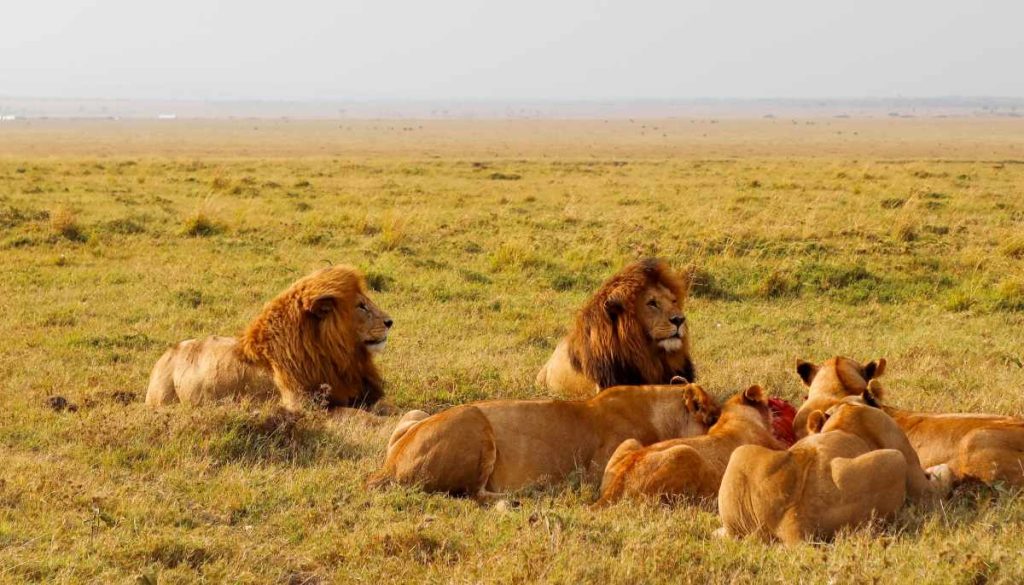
There are few moments in African wildlife travel that compare to seeing your first lion in the wild.
Perhaps it is a pride stretched across a granite kopje in the early morning sun. Perhaps it is a lioness stalking through golden grass as zebra graze nervously nearby. Or perhaps it is the deep, unmistakable roar that rolls across the plains long before the animal comes into view.
For many travellers, lions sit at the very top of the safari wish list. While Tanzania offers exceptional opportunities to see the Big Five, it is particularly renowned for its healthy lion populations and the quality of its predator sightings. If your primary goal is to maximise your chances of encountering these iconic cats, choosing the right safari itinerary can make a significant difference.
People hoping to discover lions, elephants, and giraffes up close often focus on Tanzania’s famous Northern Circuit, where several parks consistently deliver outstanding lion encounters. The good news is that Tanzania remains one of the best countries in Africa for lion viewing, with multiple destinations offering excellent opportunities throughout the year.
So which safari provides the best chance of seeing lions?
The answer begins with the Serengeti.
Why Tanzania Is One of Africa’s Best Lion Destinations
Tanzania is home to one of the largest lion populations on the continent.
Its vast protected areas provide ideal habitat for lions, while healthy populations of wildebeest, zebra, buffalo, gazelles, and other prey species support large prides throughout the country.
Unlike some safari destinations where lion sightings can feel occasional or unpredictable, many Tanzanian parks offer remarkably consistent opportunities to observe lions behaving naturally.
Visitors may encounter:
- Lions resting beneath acacia trees
- Lionesses hunting together
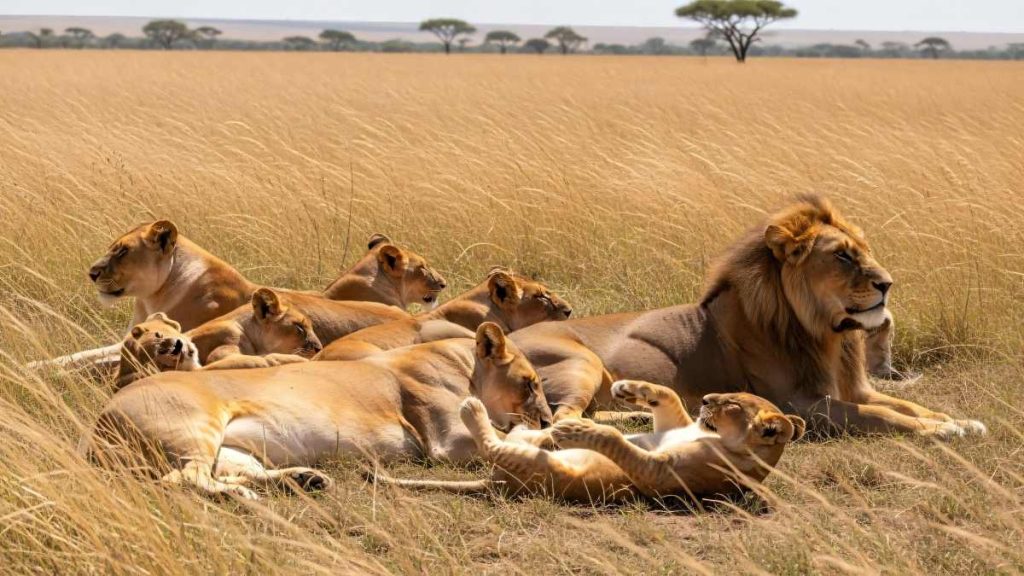
- Cubs playing around pride members
- Territorial males patrolling their range
- Predators feeding on recent kills
The sheer size of Tanzania’s wilderness areas also means these sightings often feel authentic and uncrowded.
The Serengeti: The Undisputed Champion
If the goal is maximising lion sightings, Serengeti National Park sits firmly at the top of the list.
The Serengeti supports one of the highest lion densities anywhere in Africa. Thousands of lions inhabit the ecosystem, benefiting from an enormous prey base created by the Great Migration and resident wildlife populations.
The park’s open grasslands make spotting predators relatively straightforward compared with more heavily wooded environments.
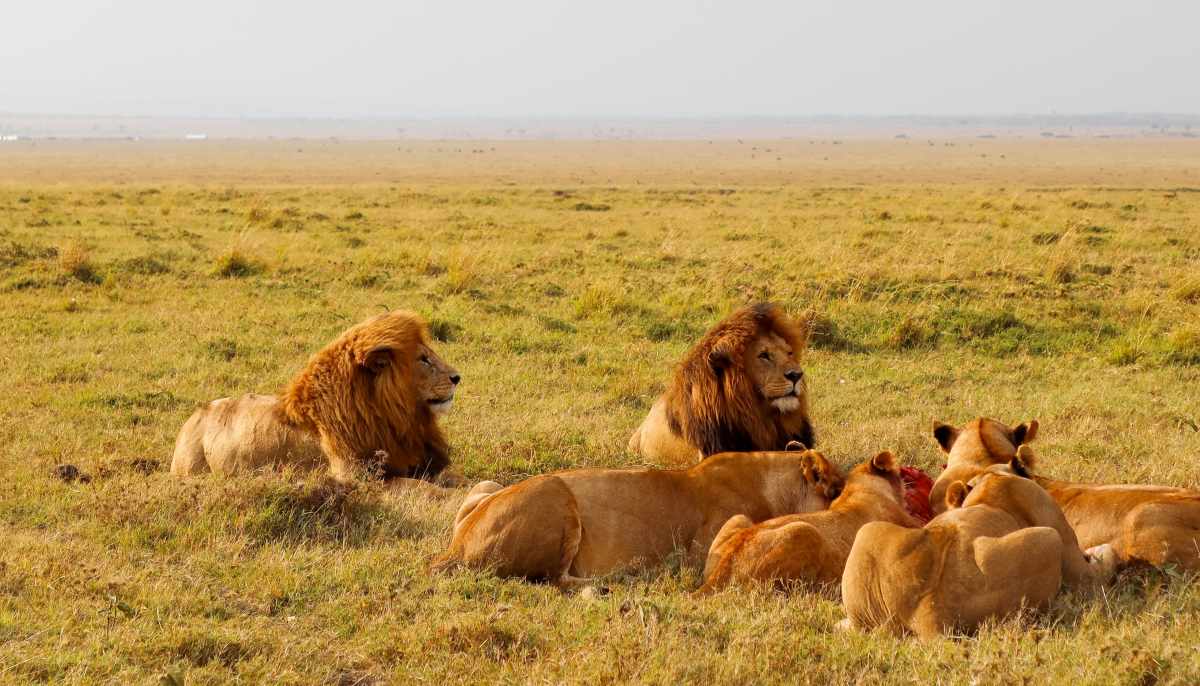
Lions are often seen:
- Resting on kopjes
- Hunting wildebeest and zebra
- Patrolling territory
- Caring for cubs
- Feeding on fresh kills
In many parts of the park, it is not unusual to see multiple prides during a single game drive.
For reliable lion sightings in Serengeti National Park, the central Seronera region is particularly famous. Permanent water sources attract wildlife throughout the year, creating ideal hunting conditions for predators and consistent viewing opportunities for visitors.
The Serengeti is not simply a place where lions exist.
It is a place where lions dominate the landscape.
Why the Great Migration Helps Lion Sightings
One reason the Serengeti performs so well for lion encounters is the Great Migration.
Each year, more than a million wildebeest, accompanied by hundreds of thousands of zebras and gazelles, move through the ecosystem in search of fresh grazing.
For lions, this creates an almost constant supply of prey.
Large prides often establish territories near migration routes, allowing them to take advantage of the abundance of food moving through their range.
Visitors travelling during migration periods frequently witness dramatic predator-prey interactions that showcase the raw realities of life on the savannah.
Even outside peak migration months, resident wildlife populations remain strong enough to support excellent lion viewing.
Ngorongoro Crater: Exceptional Lion Density
Although smaller than the Serengeti, Ngorongoro Crater deserves serious consideration.
This remarkable volcanic caldera supports an astonishing concentration of wildlife within a relatively compact area.
Lions are among its most famous residents.
The crater’s enclosed environment allows game drives to cover a large proportion of available habitat in a single day, increasing the likelihood of encounters.
Lion prides here are well studied and often spend extended periods within predictable territories.
Visitors frequently observe:
- Lions resting on open grasslands
- Males defending territory
- Cubs interacting with pride members
- Predators alongside buffalo herds
The scenery adds another dimension to the experience.
Watching lions against the backdrop of the crater walls creates a setting unlike anywhere else in Africa.
Tarangire National Park: An Underrated Lion Destination
Tarangire is often celebrated for its elephants, but lions thrive here as well.
The park’s mix of river valleys, grasslands, and woodlands provides excellent habitat for predators.
Although lion densities are lower than those found in the Serengeti, sightings are still common, particularly during the dry season when wildlife concentrates around water sources.
Tarangire also offers the possibility of observing more unusual behaviour.
Tree-climbing lions occasionally appear within the ecosystem, while large prides sometimes utilise the shade of ancient baobab trees during the hottest parts of the day.
Many visitors are pleasantly surprised by the quality of predator sightings they experience here.
Lake Manyara and Tree-Climbing Lions
Lake Manyara National Park is famous for one particular lion behaviour.
Its tree-climbing lions have become one of Tanzania’s most distinctive wildlife attractions.
While lions can occasionally climb trees elsewhere, Manyara’s lions have developed a reputation for spending extended periods resting among branches.
Scientists continue to debate exactly why this behaviour occurs, although avoiding insects and escaping heat are commonly suggested explanations.
Sightings are never guaranteed, but the possibility of seeing a lion draped across a tree limb creates an additional layer of excitement.
The park itself is smaller than many Northern Circuit destinations, making it a worthwhile complement to larger safari itineraries.
Which Safari Itinerary Offers the Best Odds?
If lion sightings are your primary objective, the strongest itinerary generally combines multiple predator-rich destinations.
A safari including:
- Serengeti National Park
- Ngorongoro Crater
- Tarangire National Park
provides outstanding opportunities across different habitats and ecosystems.
Each location contributes something unique.
The Serengeti delivers sheer abundance.
Ngorongoro offers density and accessibility.
Tarangire adds variety and exceptional landscapes.
Together, they create some of the highest lion-viewing potential available anywhere in Africa.
Understanding Lion Behaviour Improves Sightings
Timing matters as much as location.
Lions spend much of the day resting.
During the hottest hours, they may remain inactive for extended periods beneath trees, within long grass, or on rocky outcrops.
The most productive viewing periods typically occur:
- Shortly after sunrise
- Before sunset
- During cooler weather
- Around active prey herds
Experienced guides understand these behavioural patterns and use them to maximise opportunities.
Knowing where lions are likely to move, rest, or hunt often makes the difference between a distant sighting and a truly memorable encounter.
The Importance of Expert Guides
Even in areas with healthy lion populations, wildlife viewing is never entirely predictable.
This is where skilled guides become invaluable.
Experienced safari guides spend years learning animal behaviour, interpreting tracks, monitoring movement patterns, and communicating with other guides throughout the parks.
They know:
- Where prides frequently rest
- Which territories are active
- How weather affects wildlife movement
- When hunting activity is most likely
This local knowledge dramatically increases the quality of wildlife encounters.
Rather than simply driving through the landscape, guides help visitors understand the stories unfolding around them.
What About Lion Cubs?
Many travellers hope not only to see lions but also to observe cubs.
Fortunately, Tanzania offers excellent opportunities for this.
Lionesses give birth throughout the year, meaning cub sightings are possible during almost any season.
The Serengeti is particularly rewarding because its large lion population supports numerous prides at different stages of development.
Watching cubs play, explore, and interact with adults often becomes one of the most memorable moments of an entire safari.
These glimpses into pride life reveal a softer and more social side of lions than many people expect.
When Is the Best Time to See Lions?
Lions can be seen year-round in Tanzania.
However, the dry season from June to October generally offers the most reliable viewing conditions.
Vegetation becomes less dense, making animals easier to locate.
Wildlife also concentrates around water sources, increasing encounter rates across multiple species.
That said, the green season has its own advantages.
Fewer vehicles, dramatic scenery, excellent photography conditions, and abundant young animals can create equally rewarding safari experiences.
The best time often depends on what type of experience you are seeking.
Why Lions Become the Highlight of a Safari
Many travellers arrive expecting lions to be impressive.
What often surprises them is how much personality these animals display.
A pride is not simply a collection of predators.
It is a complex social unit filled with relationships, hierarchies, cooperation, and communication.
Watching lionesses coordinate a hunt, seeing cubs interact with adults, or observing a dominant male patrol his territory provides insights into behaviour that documentaries can never fully replicate.
These moments transform lions from famous animals into unforgettable experiences.
Choosing the Right Safari for Lion Encounters
If your dream safari revolves around seeing lions, Tanzania offers some of the best opportunities on Earth.
While several parks support healthy lion populations, the Serengeti remains the standout destination thanks to its extraordinary predator density, vast landscapes, and year-round wildlife activity. Combining the Serengeti with Ngorongoro Crater and Tarangire creates an itinerary that maximises both sighting opportunities and variety.
Ultimately, there are no guarantees in the wild. Yet few places offer better odds than Tanzania. With the right itinerary, experienced guides, and a little patience, the chances are extremely high that you’ll leave with memories of lions that remain vivid long after the safari ends.
FAQs
Which Tanzania national park has the most lions?
Serengeti National Park is widely regarded as having the largest lion population and the highest likelihood of sightings.
Can you see lions all year round in Tanzania?
Yes. Lions can be observed throughout the year in several national parks, including Serengeti, Ngorongoro, Tarangire, and Lake Manyara.
What time of day are lions most active?
Lions are typically most active during the cooler hours around sunrise and sunset.
Are lion sightings guaranteed on a Tanzanian safari?
No wildlife sighting can ever be guaranteed, but Tanzania offers some of the best chances in Africa due to its large lion populations and excellent safari infrastructure.
Is Serengeti better than Ngorongoro for seeing lions?
For overall lion numbers and variety of sightings, Serengeti generally has the advantage. However, Ngorongoro Crater offers exceptionally high wildlife density and excellent chances of observing lions within a compact area.