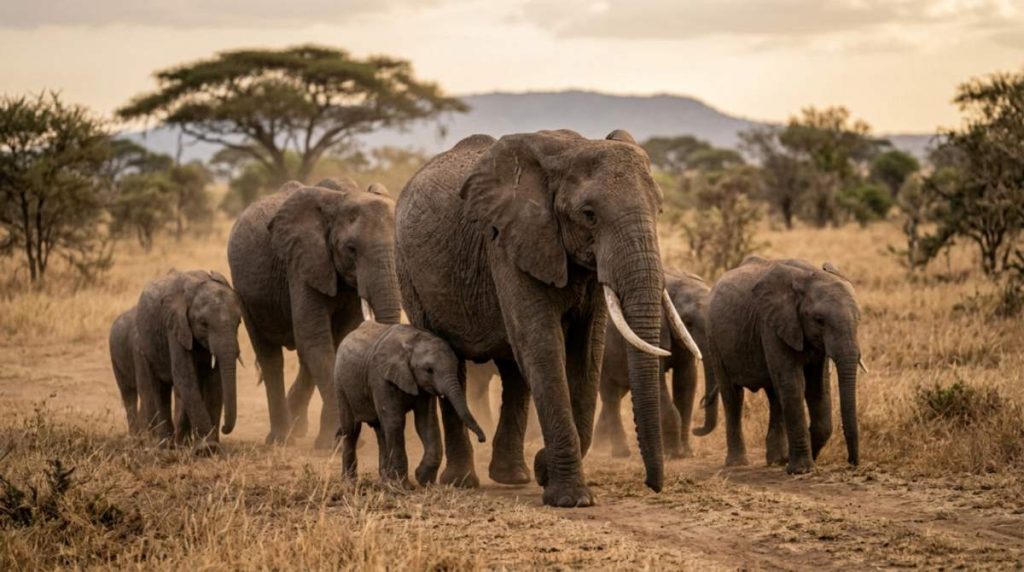
There are few wildlife encounters as memorable as seeing a large elephant herd emerge from behind a cluster of ancient baobab trees. The ground seems to vibrate beneath their feet, dust rises gently around them, and for a moment, everything else on the savannah fades into the background.
While Tanzania is home to many extraordinary safari destinations, Tarangire National Park has earned a reputation as one of Africa’s finest places to observe elephants in their natural environment. Travellers embarking on a premium safari tour across Tanzania’s best reserves often find that Tarangire’s elephants become one of the highlights of their entire journey.
The park is famous for its vast elephant population, but numbers alone do not explain what makes the experience so special. It is the combination of behaviour, landscape, conservation success, and intimate viewing opportunities that elevates Tarangire above many other safari destinations.
For anyone interested in witnessing elephants at their most natural and impressive, few places compare.
Home to One of Tanzania’s Largest Elephant Populations
Tarangire supports one of the highest concentrations of elephants in East Africa.
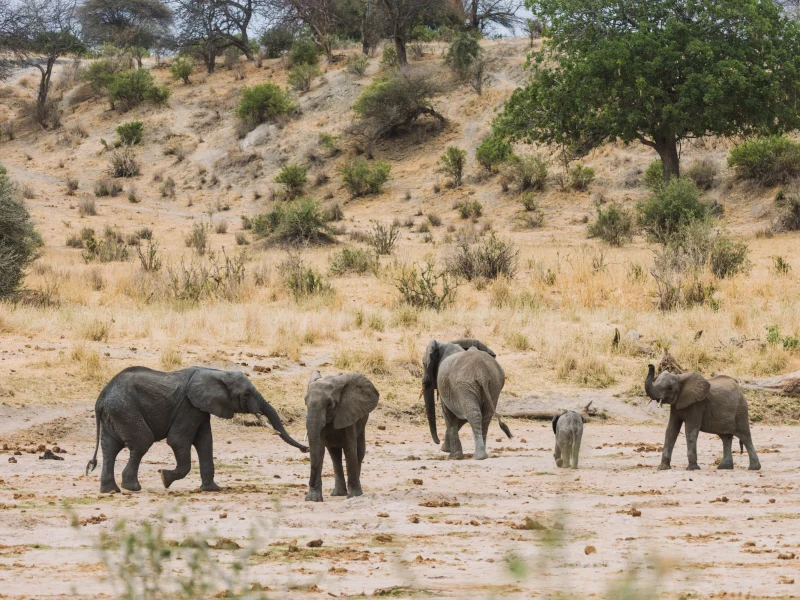
During the dry season, thousands of elephants move through the ecosystem, gathering around the Tarangire River and other permanent water sources. Herds ranging from a dozen individuals to well over one hundred animals are not uncommon.
Unlike some parks where elephant sightings may be occasional, Tarangire offers remarkable consistency.
Visitors often encounter multiple herds during a single game drive, with elephants appearing throughout the park’s diverse habitats.
The sheer abundance of these animals creates opportunities for observation that few other destinations can match.
The Landscape Was Made for Elephants
Part of Tarangire’s appeal lies in the way its scenery complements its wildlife.
The park is characterised by rolling savannahs, seasonal swamps, river valleys, and towering baobab trees that can be hundreds or even thousands of years old.
These giant trees have a particularly fascinating relationship with elephants.
During dry periods, elephants sometimes strip bark from baobabs to access moisture stored within their trunks. While this can leave visible scars, many mature baobabs are remarkably resilient and continue to thrive despite decades of elephant activity.
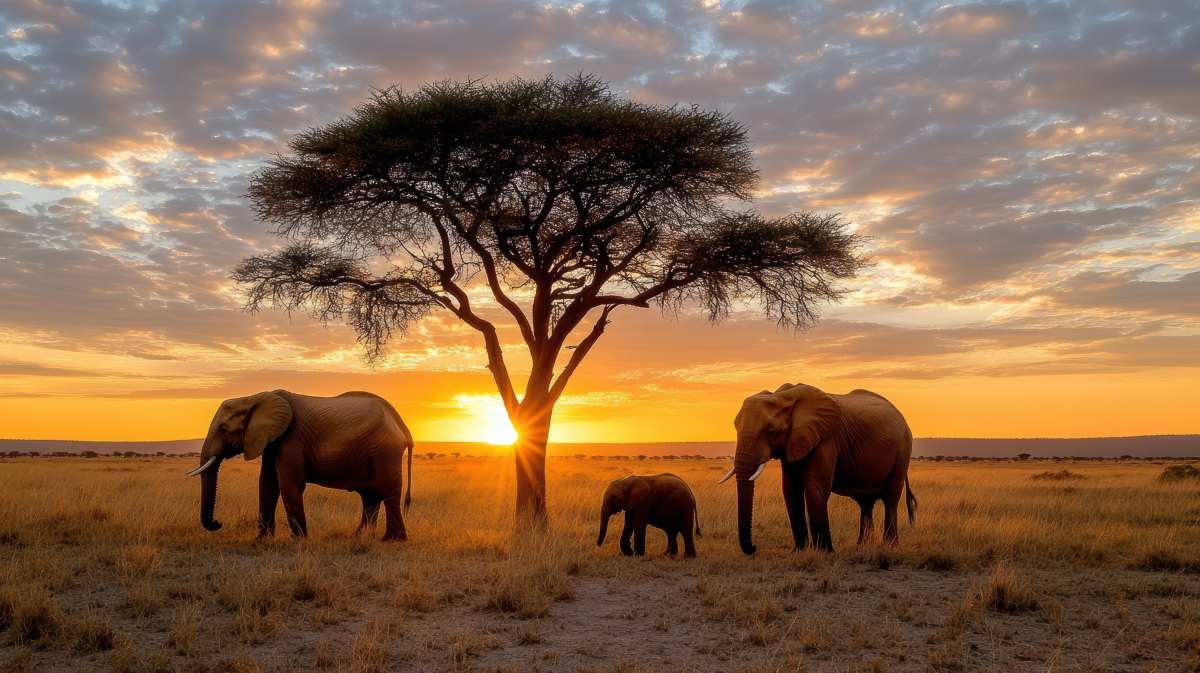
Photographically, the combination of enormous elephants and equally impressive baobab trees creates some of Tanzania’s most iconic safari scenes.
The landscape feels perfectly suited to its largest residents.
Watching Family Life Unfold
Elephants are among the most socially complex animals on the planet.
Unlike many safari species that are observed primarily feeding or resting, elephant herds display a constant stream of social interactions.
Visitors may witness:
- Mothers caring for calves
- Juveniles playing together
- Older females guiding the herd
- Greetings between family groups
- Cooperative protection of young animals
These interactions reveal a level of emotional intelligence that many travellers find deeply moving.
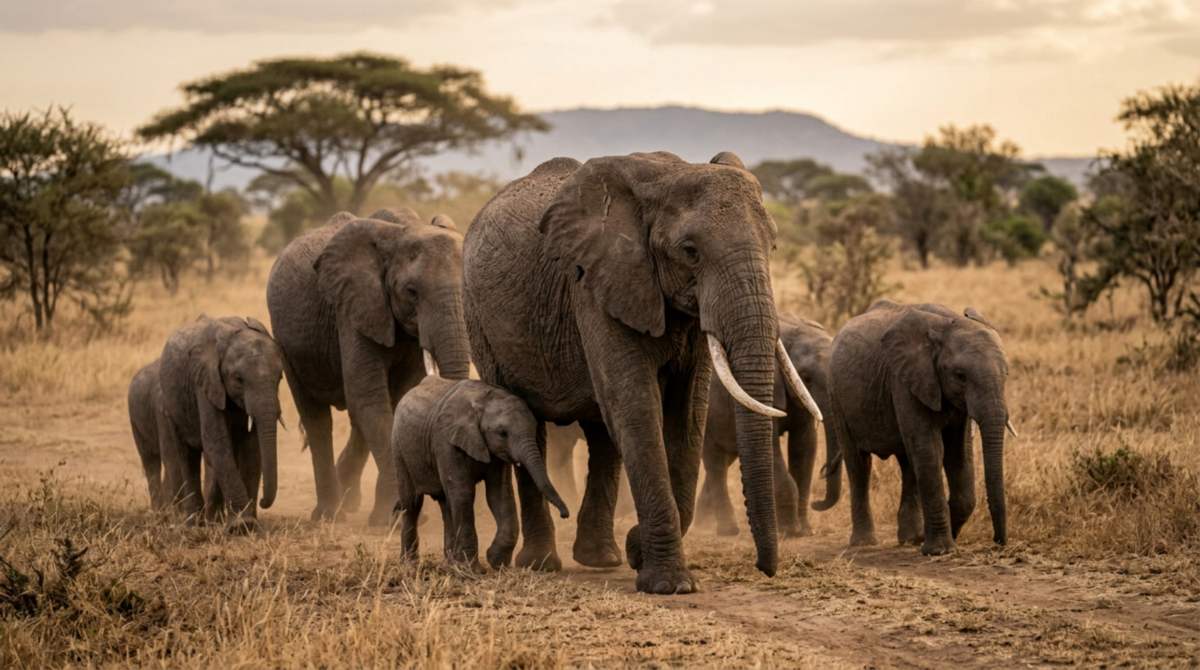
Elephant herds are led by experienced matriarchs whose knowledge of migration routes, water sources, and seasonal patterns is essential to the group’s survival.
Observing this leadership in action provides fascinating insight into elephant society.
The Dry Season Gathering
One of the main reasons Tarangire is famous for elephants is the dramatic seasonal migration that occurs within the ecosystem.
As rainfall decreases across the surrounding region, wildlife gradually moves towards the permanent water sources found within the park.
Elephants are no exception.
Large family groups converge on the Tarangire River, creating extraordinary concentrations of wildlife.
This seasonal movement transforms the park into one of Africa’s most impressive wildlife spectacles.
The best time to see elephants in Tarangire is usually in the dry months, between June and October. During this time, you’ll generally get the most consistent and dramatic sightings.
During this period, animals are easier to locate and often gather in impressive numbers.
Close Yet Respectful Encounters
One of Tarangire’s greatest strengths is the quality of its elephant encounters.
Because elephants are encountered so frequently, guides have extensive experience interpreting their behaviour and positioning vehicles responsibly.
This often allows visitors to observe natural behaviour without disturbing the animals.
Elephants may walk past safari vehicles, feed peacefully nearby, or continue social interactions seemingly unconcerned by human presence.
These close encounters feel authentic rather than staged.
There is a profound difference between spotting an elephant in the distance and quietly watching a family herd move naturally through its environment.
Tarangire consistently delivers the latter experience.
The Importance of the Tarangire River
The Tarangire River is the lifeblood of the park.
During the dry season, many smaller water sources disappear, leaving the river as one of the few reliable supplies of water.
This attracts not only elephants but also zebras, wildebeest, buffalo, giraffes, and numerous predators.
For elephants, access to water is particularly important.
Adult elephants can consume well over one hundred litres of water per day, and large herds require dependable sources throughout the year.
Watching elephants drink, bathe, and interact along the riverbanks provides some of the park’s most memorable wildlife viewing opportunities.
Calves Steal the Show
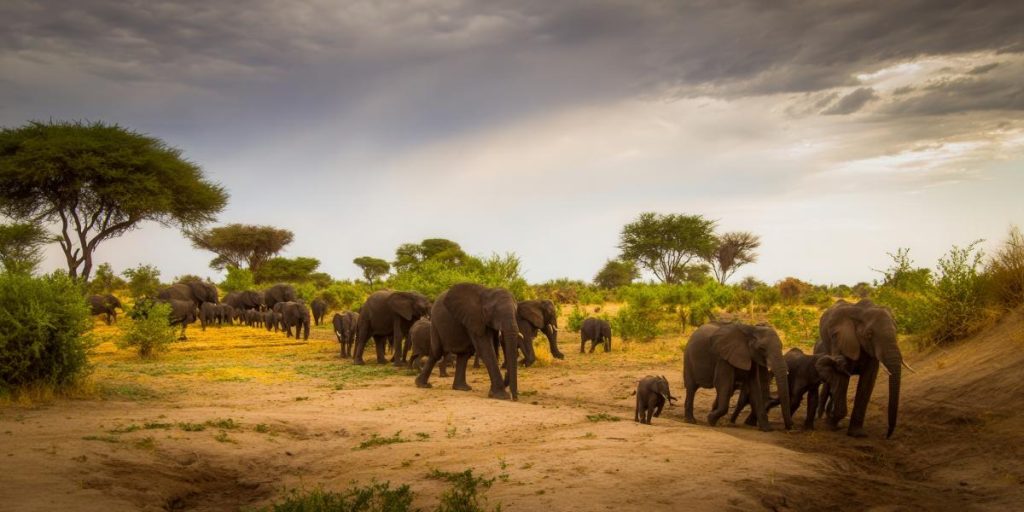
While giant bulls often capture attention due to their size and impressive tusks, elephant calves frequently become visitors’ favourite sightings.
Young elephants are endlessly entertaining.
They tumble over their own feet, experiment with their trunks, chase one another through the dust, and remain under the constant supervision of protective adults.
Observing calves also highlights the strength of elephant family structures.
Mothers, sisters, aunts, and grandmothers all contribute to caring for young animals.
This cooperative approach helps ensure the survival and development of the next generation.
Many safari-goers find these family interactions just as captivating as predator sightings.
Giants with Distinct Personalities
Spending time around elephants quickly reveals that they are not simply identical members of a herd.
Individual personalities often become apparent.
Some elephants appear curious and confident.
Others are cautious and reserved.
Young males frequently display playful behaviour, while older bulls often project a calm sense of authority.
Experienced guides can often identify behavioural differences that make each encounter unique.
This individuality contributes to the emotional connection many people feel when observing elephants.
The Soundscape of Tarangire
Much of the elephant experience extends beyond what visitors see.
The sounds of a herd moving through the bush are equally remarkable.
You may hear:
- Deep rumbles used for communication
- Branches snapping during feeding
- Dust being thrown across backs
- Water splashing during bathing
- Calves squealing as they play
These sounds create an immersive experience that photographs alone cannot fully capture.
Standing quietly while a large herd feeds nearby is one of the most memorable moments many visitors experience in Tarangire.
Conservation Success Stories
Tarangire’s elephants also represent an important conservation achievement.
Across Africa, elephant populations have faced significant challenges due to habitat loss, human-wildlife conflict, and poaching.
Protected areas such as Tarangire play a vital role in safeguarding these animals.
Ongoing conservation initiatives, anti-poaching efforts, and habitat management have helped maintain healthy elephant populations within the ecosystem.
Visitors contribute indirectly to these efforts through responsible tourism, which helps generate revenue for conservation and local communities.
Every elephant sighting therefore represents not only a wildlife experience but also a reminder of the importance of long-term conservation.
Why Photographers Love Tarangire
Photographers are particularly drawn to Tarangire’s elephant population.
Several factors contribute to this appeal:
- High elephant densities
- Dramatic baobab landscapes
- Open viewing conditions
- Excellent dry-season visibility
- Beautiful golden-hour lighting
The park’s scenery naturally frames elephant subjects in a way that creates striking images.
Whether capturing a lone bull against a baobab backdrop or a large herd crossing the plains, Tarangire consistently provides exceptional photographic opportunities.
More Than Just Elephant Numbers
Many parks can claim impressive wildlife statistics.
Tarangire’s appeal goes deeper.
The park offers opportunities to observe elephants behaving naturally within an ecosystem that supports their complex social lives and seasonal movements.
Rather than simply ticking elephants off a wildlife checklist, visitors gain a deeper appreciation for how these remarkable animals live, communicate, and interact with one another.
That depth of experience is what makes Tarangire stand apart.
Why Tarangire Leaves a Lasting Impression
Elephants are often described as the emotional heart of a safari, and nowhere is that more evident than in Tarangire National Park.
From vast family herds gathering along the river to playful calves exploring the world around them, every encounter offers something memorable. Combined with ancient baobab trees, dramatic landscapes, and outstanding wildlife viewing opportunities, the park provides one of the finest elephant experiences anywhere in Africa.
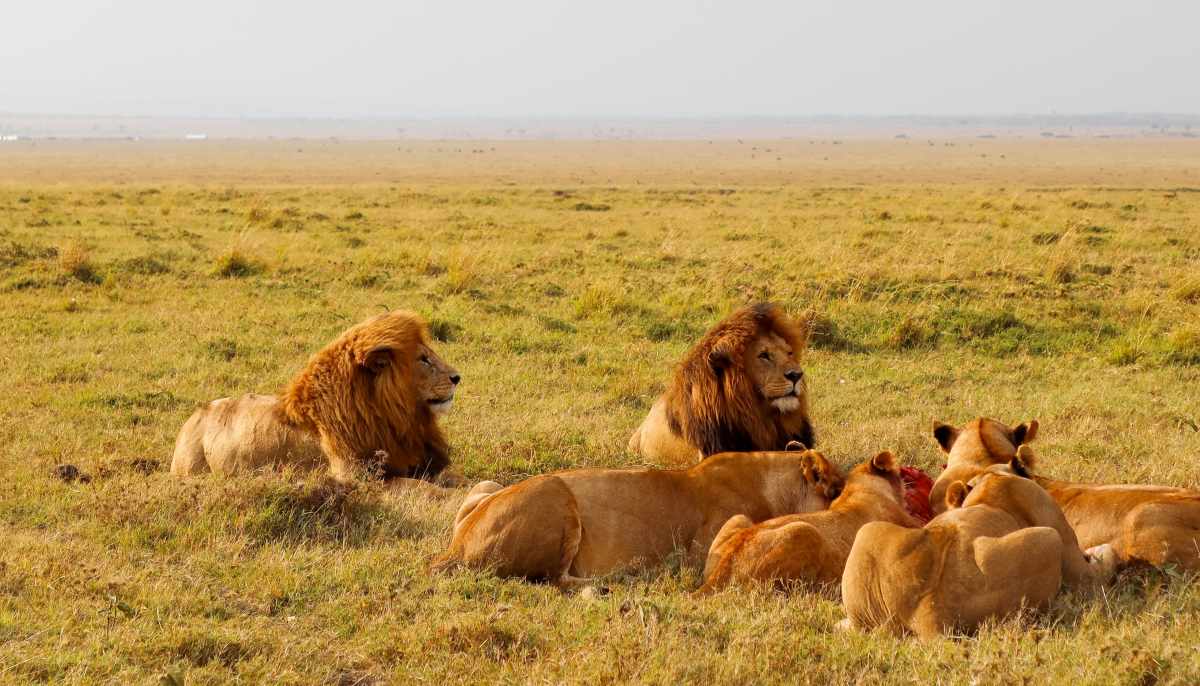
For many travellers, the lions of the Serengeti or the scenery of Ngorongoro may be what initially inspires a Tanzanian safari. Yet it is often Tarangire’s elephants that remain most vivid in their memories long after the journey ends.
FAQs
Why is Tarangire National Park famous for elephants?
Tarangire is known for supporting one of the largest elephant populations in Tanzania, particularly during the dry season when large herds gather around permanent water sources.
When is the best time to see elephants in Tarangire?
The dry season, generally from June to October, offers the most reliable elephant sightings as wildlife concentrates near the Tarangire River.
How many elephants live in Tarangire National Park?
Numbers fluctuate seasonally, but the greater Tarangire ecosystem supports several thousand elephants throughout the year.
Can you see baby elephants in Tarangire?
Yes. Family herds frequently include calves of various ages, making Tarangire an excellent destination for observing elephant family life.
Is Tarangire worth visiting if I’ve already been to Serengeti?
Absolutely. Tarangire offers a very different safari experience, particularly for elephant viewing, and complements the Serengeti exceptionally well.