

Mount Kilimanjaro isn’t just a mountain – it’s a journey through entire worlds stacked on top of each other. Few places on Earth allow you to walk from humid rainforest to arctic desert in less than a week, yet that’s exactly what happens as you ascend Africa’s highest peak.
It’s one of the reasons the mountain feels so unforgettable: every day introduces a new landscape, a new temperature, and a new challenge.
Understanding the Kilimanjaro climate zones isn’t just interesting for curious travellers – it’s essential for anyone who wants to experience the challenge of Africa’s tallest peak. Each zone comes with its own weather patterns, terrains, and wildlife. And the higher you go, the greater the contrast becomes.
Here’s a closer look at the five ecological zones you’ll pass through on your way to the summit.
1. Cultivation Zone (800-1,800 metres)
Your journey usually begins just outside the national park, in the fertile foothills that surround the mountain. Locals often call this the “garden” of Kilimanjaro, and it’s easy to see why. The soil here is incredibly rich thanks to ancient volcanic activity, making it perfect for farming.
Banana plantations, maize fields, and coffee farms dominate the landscape. Small villages sit among the greenery, with the Chagga people tending the land that has supported their communities for generations.
The climate is warm and humid, with daytime temperatures averaging 20-30°C. Rainfall is common, especially from March to May and November to December. It’s a gentle, vibrant introduction – one that feels worlds away from the frozen summit waiting above.
2. Rainforest Zone (1,800-2,800 metres)
Step past the park gates, and the scenery changes immediately. Moist air, towering trees, and thick undergrowth create an atmosphere that feels almost otherworldly. This is the rainforest belt – the first major ecological region inside Kilimanjaro National Park.
Here, temperatures drop slightly to around 15-25°C, but humidity remains high. Mist drifts between the branches, and the forest floor feels soft beneath your boots. The rainfall here is the highest on the mountain, supporting an astonishing variety of life.
Blue monkeys and colobus monkeys leap across the canopy. Moss coats tree trunks in thick layers, and you’ll often hear birds before you see them – hornbills, turacos, and countless smaller species.
Trails can be muddy and slippery, especially after rain, so this is where good footwear starts to matter. It’s also where most climbers realise just how dramatically Kilimanjaro’s climate zones shift in such a short distance.
3. Heath and Moorland Zone (2,800-4,000 metres)
Once you climb above the rainforest, the surroundings will start to open up. The dense canopy gives way to rolling heaths, giant heathers, and volcanic rock formations. The air becomes drier, the sky wider, and the horizon stretches out beneath you.
Daytime temperatures can still reach 15-20°C, but nights drop sharply, often falling below freezing. You’ll also feel the altitude more noticeably here as breathing becomes slightly harder, and your pace naturally slows.
This is where the landscape begins to look unmistakably volcanic. Massive alien-looking plants dominate the terrain: the giant groundsel and giant lobelia, species that have adapted to survive the cold nights and strong UV exposure. The contrast between these prehistoric plants and the barren rock nearby is unforgettable.
For many trekkers, this is the point where Kilimanjaro starts to feel like a real expedition.
4. Alpine Desert Zone (4,000-5,000 metres)
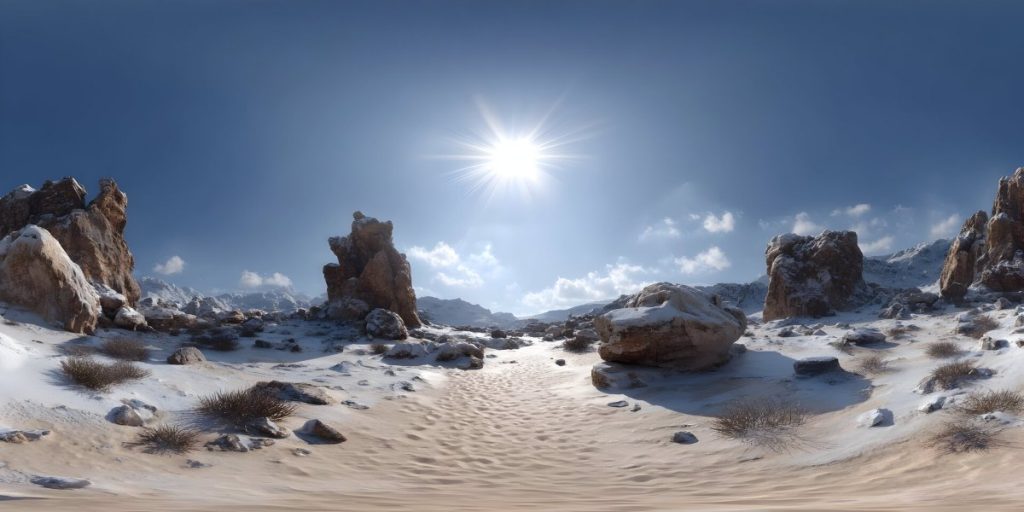
The shift into the alpine desert is dramatic. Vegetation becomes sparse, temperatures fluctuate wildly, and the environment grows harsher with every step. During the day, the sun can be intense, pushing temperatures to around 10-20°C. At night, they can drop to -10°C or even lower.
The air is noticeably thinner here – oxygen levels fall to roughly 60% of what you’re used to at sea level. Dust, gravel, and volcanic scree dominate the terrain, and strong winds often whip across the slopes. It’s dry, stark, and hauntingly beautiful.
This zone is where many climbers begin to feel the strain of altitude. Headaches, light nausea, and difficulty sleeping become more common, which is why acclimatisation days are so important. Going “pole pole” – slowly, slowly – isn’t just good advice here; it becomes essential.
But there’s beauty too: endless horizons, shimmering glaciers in the distance, and the sense that the roof of Africa is finally within reach.
5. Arctic Summit Zone (5,000-5,895 metres)
Everything feels different in the arctic zone. The temperature plummets, oxygen levels drop even further, and the landscape becomes almost lunar. This is where the icefields and glaciers remain – remnants of a colder world that is slowly disappearing.
Daytime temperatures can fall to -15°C, with windchill pushing it even lower. At night or during the summit push before dawn, the cold can be biting. Breathing becomes a conscious effort, and climbers often find themselves pausing every few steps during the final ascent.
Yet the reward is indescribable. As the sun rises over the jagged horizon, the glaciers glow with a soft blue light. The crater rim appears ahead, and Uhuru Peak – 5,895 metres above sea level – finally comes into view. Standing here isn’t just a physical achievement; it’s an emotional one. A moment carved into memory.
Why Understanding Kilimanjaro’s 5 Climate Zones Matters
Understanding Kilimanjaro’s climate zones will help you prepare for the challenge. Each zone requires different clothing, pacing, and expectations:
- Warm, breathable layers for the lower zones
- Insulated jackets and gloves for the upper slopes
- Sun protection in the alpine desert
- Slow, steady ascent to reduce the risk of altitude sickness
If you want a broader picture of the mountain, check out our overview of the Kilimanjaro mountain. It’ll give you a clearer sense of how the terrain, altitude, and routes fit together before you start mapping out your trek.
Final Thoughts
Climbing Kilimanjaro is like travelling from the equator to the Arctic in a single journey. Each zone tells its own story – from the lush rainforest alive with wildlife to the frozen, windswept summit that watches over Tanzania.
The mountain doesn’t reveal all its beauty at once. It reveals it gradually, step by step, rewarding patience, resilience, and curiosity.
And that journey through Kilimanjaro’s climate zones is what makes the climb so remarkable. It’s not just about reaching Uhuru Peak – it’s about everything you see, feel, and endure along the way.