


You’re planning a Tanzanian safari. Brilliant. Now comes the question that’ll significantly affect both your experience and your budget: private or group?
It’s not a straightforward decision, and anyone telling you one option is definitively “better” is probably trying to sell you something. Both work. Both have genuine advantages. The right choice depends entirely on your specific situation, budget, and what you actually want from the trip.
The Money Question
Let’s address this first because it’s usually the deciding factor for most people.
Group safaris – sometimes called “joining safaris” – split the costs between multiple travellers. You’re sharing a vehicle (typically 4-7 people), splitting guide fees, and operating on a fixed itinerary with set accommodations. This makes them considerably cheaper, often 30-50% less than private options.
A week-long group safari might run £2,000-3,500 per person depending on accommodation level and parks visited. The same itinerary as a private safari for two people could easily be £4,000-6,000+ each.
For solo travellers, the maths changes completely. Private safaris charge based on the vehicle, not per person, so going solo means you’re covering all costs yourself. Group safaris let you split expenses with strangers, making them vastly more affordable if you’re travelling alone.
That said, if you’re a group of four or more people travelling together, the per-person cost gap between “joining” and “private” narrows considerably. Sometimes it’s worth the extra to go private.
Flexibility And Control
This is where private safaris really shine.
With a private safari, you control the schedule. Want to spend an extra hour watching lions? Done. Fancy skipping the packed Ngorongoro viewpoint to explore a quieter area? No problem. Interested in birds and want to stop frequently for photography? Your guide works around your interests.
You choose when to leave in the morning, how long to stay at sightings, when to break for lunch, when to head back. If everyone in your vehicle is happy to skip sundowners and keep driving until dark for better animal sightings, you can do that.
Group safaris operate on fixed schedules. Morning game drive starts at a set time, lunch happens when it’s scheduled, and you’re back at camp by a certain hour. If you want to spend longer watching a leopard but others in the vehicle are ready to move on, you’re outvoted. The guide needs to balance everyone’s interests, which inevitably means compromises.
Some people find the structure of group safaris relaxing – decisions are made for you, there’s a rhythm to the days. Others find the lack of control frustrating, especially if their priorities don’t match the group’s.
The Social Element
Whether you see this as a pro or a con depends entirely on your personality.
Group safaris put you in close quarters with strangers for days. You’re sharing a vehicle, often eating meals together, sometimes staying in the same camps. If you click with the group, it’s brilliant – safari friendships form quickly when you’re sharing these extraordinary experiences. Stories get swapped, cameras get compared, and there’s a communal energy to the whole thing.
If you don’t click with the group, it’s awkward. You’re stuck spending 8-10 hours daily in a vehicle with people you’d normally avoid at a party. Different energy levels, different photography styles, different ideas about what’s interesting – it can grate.
Private safaris eliminate this variable entirely. It’s just you, your travel companions, and your guide. More intimate, more controlled, potentially more relaxing if you’re not particularly social or if you’re on a romantic trip.
Solo travellers often prefer group safaris specifically for the social aspect. It’s a natural way to meet people when you’re travelling alone, and you don’t have to make conversation constantly – wildlife watching provides natural breaks.
Vehicle Dynamics
Group safari vehicles are typically larger – often 7-seater Land Cruisers or similar. Everyone technically gets a window seat, but the reality is that 7 people trying to photograph the same lion means someone’s always got a partially blocked view.
Private safaris usually use 4-seater vehicles (plus driver/guide), giving everyone significantly more space and better sighting positions. You can spread out, move around more easily, and there’s no jostling for camera angles.
The vehicle quality can vary more with group safaris since budget pressures sometimes mean older vehicles or less frequent maintenance. Private safaris, especially at higher price points, tend to have newer, better-maintained vehicles with superior optics and equipment.
Guide Quality And Attention
This one’s nuanced. Guide quality varies enormously regardless of whether it’s private or group, but there are structural differences.
On private safaris, the guide’s attention is entirely focused on your group. They can tailor commentary to your knowledge level, adjust the pace of information delivery, and dig deeper into topics you find interesting. If you’re experienced safari-goers, they can skip the basics. If you’re first-timers, they’ll explain everything thoroughly.
Group safari guides need to pitch their expertise at a level that works for everyone, which usually means aiming for the middle. Experienced safari-goers might find it a bit basic, whilst complete novices might still feel overwhelmed.
However – and this is important – many excellent guides prefer group safaris because they offer steadier work and guaranteed income. The absolute best guides aren’t exclusively doing private safaris. You can absolutely get phenomenal guides on group trips.
Accommodation Choices
Private safaris usually offer more flexibility in accommodation choices. You can mix luxury lodges with mobile camps, choose specific properties based on your preferences, or even adjust plans mid-trip if something’s not working.
Group safaris typically use mid-range lodges or permanent tented camps with set bookings. They’re perfectly comfortable, often genuinely lovely, but you don’t get to choose based on personal preference. Everyone’s staying at the same place on the same night.
Budget is obviously a factor here too. Private safaris can go ultra-luxury if you’re willing to pay, or budget camping if you prefer. Group safaris tend to cluster in the mid-range because that’s where the volume market sits.
Itinerary Customisation
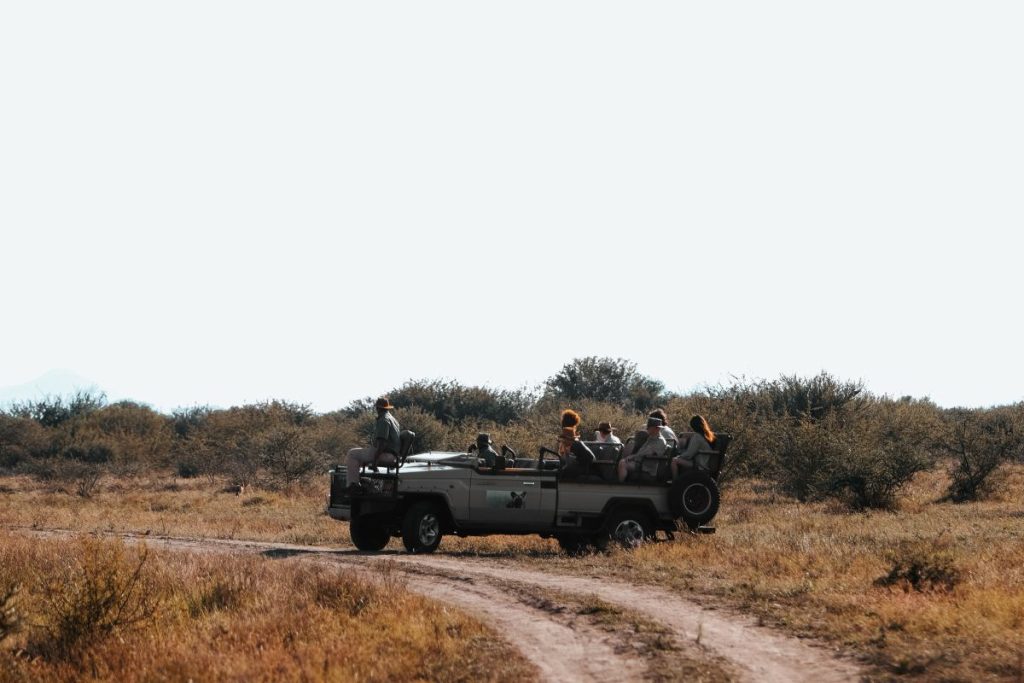
Want to spend three days in Tarangire focusing on elephants, then two nights in a remote Serengeti area most tourists don’t visit? Private safari can absolutely do that.
Prefer a non-standard route or timing – maybe visiting during less popular months, taking unusual routes between parks, adding cultural experiences or walking safaris? Much easier to arrange privately.
Group safaris follow proven itineraries that hit the major parks in logical sequences. They work well, they’re tried and tested, but there’s minimal room for personalisation. You’re buying a package rather than building a bespoke trip.
For first-time safari-goers, the standard group itineraries are often perfect – they’re designed to maximise wildlife sightings and hit the highlights. Experienced safari-goers or people with specific interests benefit more from private customisation.
Privacy And Pace
Some people are on safari to disconnect, reflect, or simply enjoy nature without constant social interaction. Private safaris offer that privacy completely.
Couples celebrating anniversaries or honeymoons usually prefer private for obvious reasons. Families with young children often find private easier because you can adjust the pace around kids’ needs without feeling guilty about disrupting others.
Group safaris have a communal energy that some people love. There’s shared excitement at sightings, group photo sessions, evening recaps of the day’s highlights. It’s a different experience, not necessarily worse, just different.
Making The Decision
If budget’s your primary constraint and you’re flexible about control, group safaris make complete sense. You’ll still see incredible wildlife, stay in decent accommodation, and have a brilliant experience for considerably less money.
If you value flexibility, have specific interests you want to pursue, or are travelling as a couple/family and want privacy, private safaris justify the extra cost.
Solo travellers usually lean toward group safaris unless budget truly isn’t a concern. The social aspect and cost-sharing make it the practical choice.
Consider your travel style honestly. Are you easygoing and adaptable, or do you get frustrated when things don’t run to your preferences? The answer probably indicates which safari style suits you better.
Whatever you choose, get the tips for planning your Tanzanian safari sorted early. Good operators book up months in advance, especially during peak season, and last-minute decisions often mean settling for whatever’s available rather than what you actually want.
And honestly, the wildlife doesn’t care whether you’re in a private vehicle or a group one. You can have a transformative safari experience either way. It’s about matching the structure to your personality, budget, and travel style rather than one option being objectively superior.
Book your unforgettable safari through Tanzania’s top reserves and commit to whichever approach genuinely suits your situation. Both get you face-to-face with elephants, lions, and wildebeest migrations. The rest is just details.