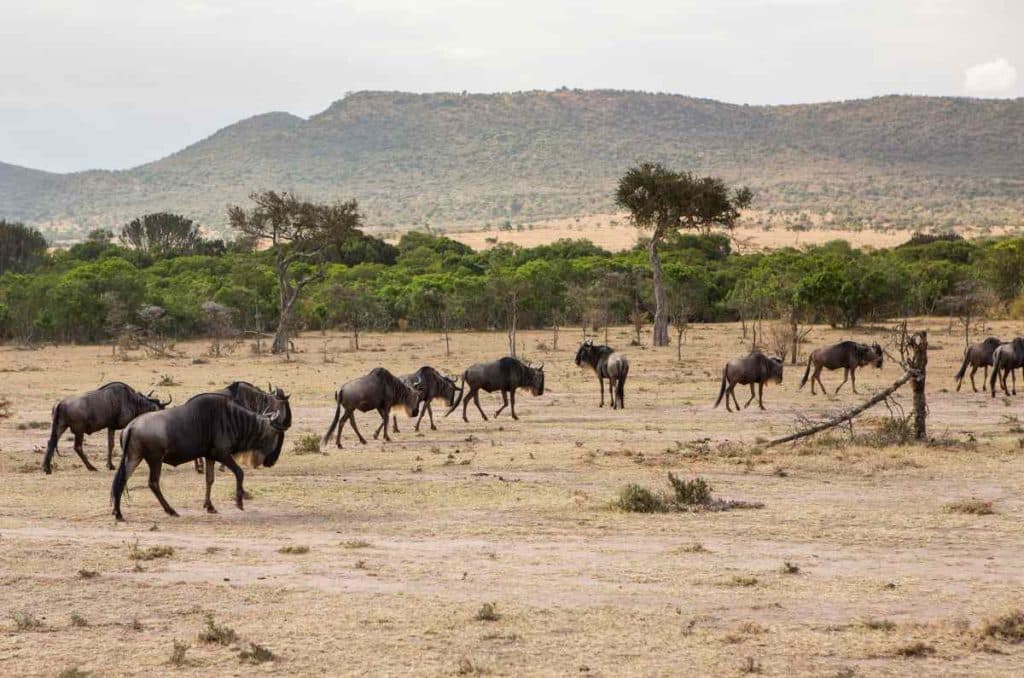
Tanzania rewards different months for different reasons — here’s what each one actually looks like on the ground, plus our next confirmed departure dates.
Short dry spell. Wildebeest calving starts on the southern Serengeti plains — predator action follows.
Shoulder seasonThe single best month for newborn wildebeest and the predators that trail them, around Ndutu.
Shoulder seasonRains build through the month. Lush, quiet, and the start of the low season.
Long rainsThe wettest month. Lowest rates of the year, dramatic skies, some camps close.
Long rainsRains ease through the month. Green, uncrowded, and still excellent value.
Long rainsBush thins out fast. Migration herds push into the Western Corridor. Kilimanjaro season opens.
Dry seasonPeak dry season begins. Dramatic Grumeti River crossings in the western Serengeti.
Dry seasonClear skies, cool mornings, the herds reach the Mara River in the north — the classic crossing images.
Dry seasonDriest month of the year. Exceptional visibility across every northern-circuit park.
Dry seasonStill dry, still excellent. Herds begin drifting back south as the season turns.
Dry seasonBrief afternoon showers green things up fast. Migration heads back toward the southern plains.
Shoulder seasonRains fade by mid-month. Warm, green, and a good value window before the January calving rush.
Shoulder seasonMost Mauly journeys are private and start whenever you’re ready — but a few small-group treks run on fixed dates, joining travelers together at a lower per-person cost. Here’s what’s currently open.
Fixed departures are the exception, not the rule — most Mauly journeys are built around your calendar, not ours.
Plan Your Journey →